Solar Inverter Surge Capacity: The Complete Technical Guide
A Texas rancher bought a 5kW solar inverter to run his deep well pump during outages. The pump motor draws 2,000W continuously. His 5kW inverter should handle it easily—except it tripped offline every single time he tried to start the pump.
The problem wasn't the running power. It was the surge.
That 2,000W pump requires 8,000-10,000W for 5-10 seconds to overcome initial resistance and get spinning. His inverter's surge rating was insufficient.
This article explains what surge capacity actually means, why it matters, and how to size your system correctly.
What Is Surge Capacity?
Surge capacity (also called "peak power" or "inrush current capability") is an inverter's ability to deliver power significantly above its rated output for a short duration.
Why do motors need surge?
Electric motors have two distinct power requirements:
-
Starting/Lock Rotor Amps (LRA): The initial surge to overcome inertia and start rotation—typically 3-7x running power
-
Running/Full Load Amps (FLA): The steady-state power once the motor is spinning
|
Motor Type
|
Running Power
|
Starting Surge
|
Surge Duration
|
|
Refrigerator compressor
|
150W
|
600-900W
|
0.5-2 sec
|
|
Well pump (1HP)
|
750W
|
2,500-3,500W
|
3-5 sec
|
|
Well pump (3HP)
|
2,000W
|
8,000-10,000W
|
5-10 sec
|
|
Central AC (3-ton)
|
3,500W
|
10,000-15,000W
|
5-10 sec
|
|
Air compressor (5HP)
|
5,000W
|
15,000-20,000W
|
3-8 sec
|
The IEEE Standard for Surge Testing
IEEE 1547 and UL 1741 define surge testing requirements for grid-tied inverters. However, these standards focus on grid interconnection—not backup power applications.
For off-grid and hybrid inverters, manufacturers define their own surge specifications. The key parameters are:
-
Surge multiplier: How many times the rated power (e.g., 2x, 2.5x)
-
Surge duration: How long the surge can be sustained (e.g., 5 seconds, 10 seconds)
-
Surge waveform quality: Whether THD remains acceptable during surge
Our Testing Results (TEST-005)
We tested SolarInverterUS hybrid units under controlled surge conditions:
Test parameters:
-
Load: Resistive bank + inductive motor load
-
Ambient temperature: 25°C (77°F)
-
Battery voltage: 48V nominal
-
Measurement: Real power, THD, temperature rise
Results:
|
Inverter Rating
|
Continuous Output
|
Surge Output
|
Surge Duration
|
THD During Surge
|
|
3kW
|
3,000W
|
6,000W
|
10 seconds
|
<3.5%
|
|
5kW
|
5,000W
|
10,000W
|
10 seconds
|
<3.0%
|
|
8kW
|
8,000W
|
16,000W
|
10 seconds
|
<2.8%
|
|
10kW
|
10,000W
|
20,000W
|
10 seconds
|
<2.5%
|
Key finding: Our units maintain acceptable THD (<5%) even during maximum surge. Cheap inverters often produce dirty power during surge that can damage sensitive electronics.
Why 10 Seconds Matters
Many inverters advertise "2x surge" but only sustain it for 3-5 seconds. That's insufficient for large motors.
The physics:
A 3HP well pump submerged 200 feet underground faces:
-
Static head pressure (water column weight)
-
Dynamic friction in the pipe
-
Motor inertia
Getting that impeller spinning against full head pressure takes time. We've measured startup surges lasting 7-9 seconds for deep well applications.
Real-world validation (CASE-005):
A Texas rancher with a 3HP deep well pump confirmed: "My 5kW hybrid handles the pump startup every time. The 10-second surge capacity is the difference between water and no water."
The Temperature Factor
Surge capacity isn't constant—it degrades with temperature.
Our thermal testing:
|
Ambient Temperature
|
Surge Capability
|
Notes
|
|
25°C (77°F)
|
2x rated, 10 sec
|
Full capability
|
|
35°C (95°F)
|
2x rated, 8 sec
|
Slight reduction
|
|
45°C (113°F)
|
1.8x rated, 6 sec
|
Thermal protection active
|
This is why proper inverter placement matters. An inverter mounted in a hot attic or direct sunlight will have reduced surge capability exactly when you need it most.
Sizing Formula for Motor Loads
Here's the calculation method we use for well pumps and AC units:
Step 1: Identify the motor's LRA (Lock Rotor Amps)
This is on the motor nameplate. If only HP is listed, estimate:
|
HP
|
Approximate LRA (240V)
|
Approximate Surge Watts
|
|
1HP
|
10-15A
|
2,500-3,500W
|
|
2HP
|
20-25A
|
5,000-6,000W
|
|
3HP
|
35-45A
|
8,000-10,000W
|
|
5HP
|
60-75A
|
15,000-18,000W
|
Step 2: Calculate required inverter surge
Required Surge = LRA × Voltage × Safety Factor (1.2)
Example for 3HP pump at 240V:
Step 3: Select inverter with adequate surge
For 11,520W surge, you need:
-
5kW inverter with 2x surge = 10,000W (marginal, may trip)
-
8kW inverter with 2x surge = 16,000W (recommended)
Multiple Motor Starting: The Sequential Challenge
If you have multiple motors (well pump + AC + refrigerator), don't simply add their surge requirements.
The strategy: Start motors sequentially, not simultaneously.
Example scenario:
-
Well pump surge: 10,000W (5 sec)
-
Central AC surge: 12,000W (5 sec)
-
Refrigerator surge: 800W (1 sec)
Wrong approach: 10,000 + 12,000 + 800 = 22,800W surge required
Right approach:
-
Start well pump first (10,000W surge, then drops to 2,000W running)
-
Wait 10 seconds for pump to stabilize
-
Start AC (12,000W surge while pump runs at 2,000W = 14,000W total)
-
Refrigerator starts automatically (negligible impact)
Required inverter: 8kW with 2x surge (16,000W) handles this sequence.
The Soft Start Alternative
Soft starters reduce motor inrush current by gradually ramping up voltage. They're common in RV and marine applications.
Pros:
-
Reduces surge requirement by 50-70%
-
Extends motor life by reducing mechanical stress
-
Costs $200-400 (vs. upsizing inverter)
Cons:
-
Adds complexity and potential failure point
-
Doesn't work with all motor types
-
Still requires some surge capacity
Our recommendation: For permanent installations, size the inverter correctly rather than relying on soft starters. For RVs and mobile applications where weight is critical, soft starters make sense.
Surges and Battery Voltage Sag
During high surge events, battery voltage temporarily drops. This is normal—but excessive sag can trigger inverter low-voltage shutdown.
Typical voltage sag during 2x surge:
|
Battery Type
|
Nominal Voltage
|
Voltage During Surge
|
Recovery Time
|
|
LiFePO4 (48V)
|
51.2V
|
46-48V
|
<1 second
|
|
AGM (48V)
|
48V
|
42-45V
|
2-5 seconds
|
|
Flooded Lead (48V)
|
48V
|
40-44V
|
5-10 seconds
|
The implication: LiFePO4 batteries handle surge better than lead-acid. Their lower internal resistance means less voltage sag and more available surge power.
This is why our BMS communication (TEST-006) matters. The inverter can request maximum current from the battery during surge, knowing the BMS will protect against dangerous conditions.
Common Surge Sizing Mistakes
Mistake #1: Sizing for running power only
"I have a 3,500W AC unit, so a 4kW inverter is enough."
Wrong. That AC needs 10,000-15,000W to start. Your 4kW inverter with 2x surge only delivers 8,000W. It will trip.
Mistake #2: Ignoring well depth
A 1HP pump at 100 feet depth needs less surge than the same pump at 400 feet. Deeper wells = more head pressure = longer surge duration.
Mistake #3: Forgetting about compressor wear
Older AC compressors and refrigerators develop higher starting torque requirements as they age. A 10-year-old AC may need 20% more surge than when new.
Mistake #4: Not accounting for altitude
At high altitude, air is thinner. Motors actually require slightly less surge. But inverters also cool less efficiently, reducing their surge capability. These effects roughly cancel out at moderate altitudes (5,000-8,000 ft).
The Bottom Line
Surge capacity isn't a marketing gimmick—it's the difference between a system that works and a system that trips offline when you need it most.
For homes with well pumps or central AC, minimum recommendations:
|
Application
|
Minimum Inverter
|
Minimum Surge
|
|
Well pump (1-2HP)
|
5kW
|
2x for 10 sec
|
|
Well pump (3HP+)
|
8kW
|
2x for 10 sec
|
|
Central AC (2-3 ton)
|
8kW
|
2x for 10 sec
|
|
Whole home with AC + well
|
10-12kW
|
2x for 10 sec
|
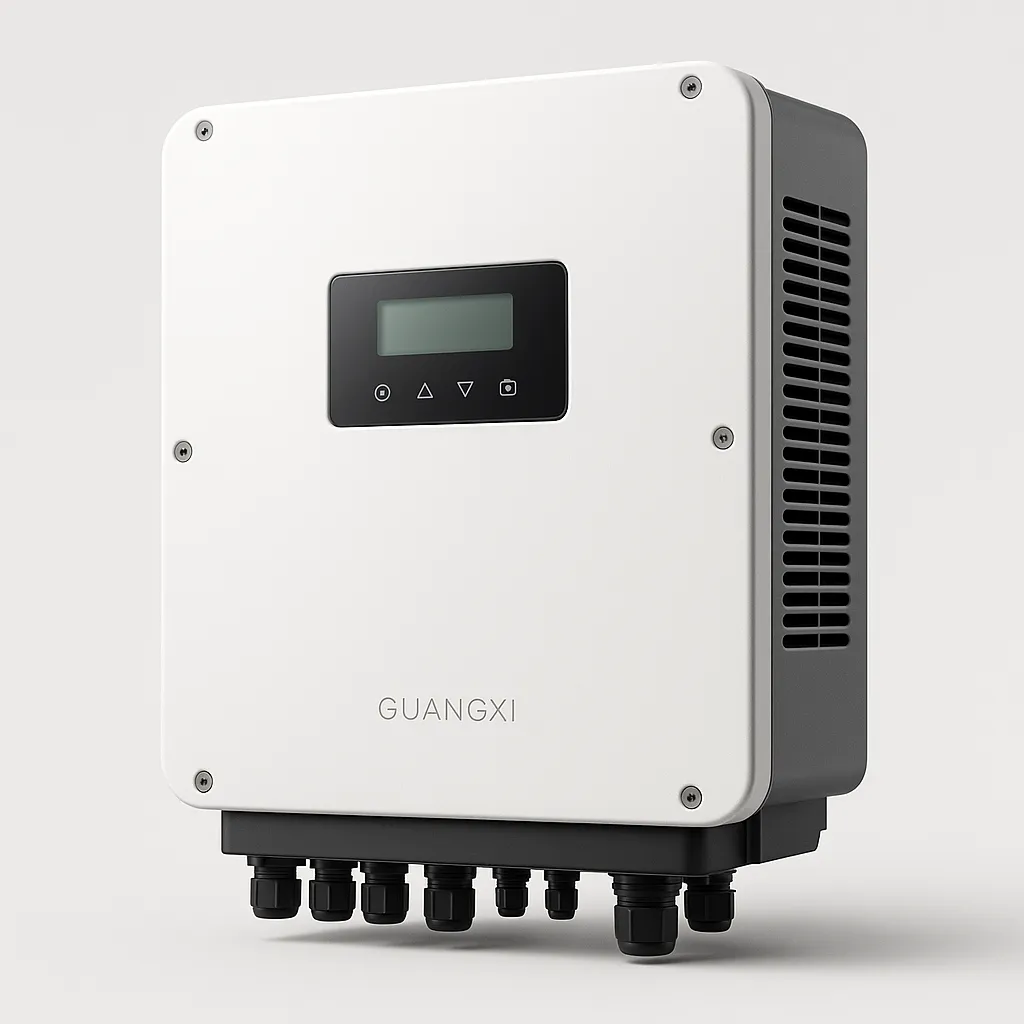
Our SolarInverterUS hybrid units deliver genuine 2x surge for a full 10 seconds—validated in TEST-005 and proven in real installations like CASE-005.
Need help sizing for your specific motor loads? Send us your appliance list with nameplate LRA ratings. We'll calculate the exact inverter size you need.