The Two Different Ways to Size an Inverter
Here's where 90% of DIYers go wrong: They size their inverter based only on their monthly electric bill, completely ignoring what happens during a grid outage.
There are actually two completely different sizing scenarios:
|
Scenario
|
Sizing Based On
|
Common Mistake
|
|
Grid-Tied Only
|
Monthly kWh usage, peak sun hours
|
Over-sizing beyond panel capacity
|
|
Hybrid with Backup
|
Largest motor surge + critical loads
|
Forgetting in-rush current
|
Let me walk you through both calculations properly.
Part 1: Grid-Tied System Sizing
For a pure grid-tied system (no battery backup), sizing is straightforward:
Step 1: Calculate Your Daily Energy Usage
Pull your last 12 months of electric bills. Look for your annual kWh usage and divide by 365 to get daily average.
Example:
Step 2: Determine Peak Sun Hours for Your Location
Peak sun hours aren't daylight hours—they're the equivalent hours of full-intensity sunlight. The National Renewable Energy Laboratory (NREL) provides solar irradiance data by location. [Source: NREL, 2024]
|
Location
|
Annual Average Peak Sun Hours
|
|
Phoenix, AZ
|
6.5
|
|
Los Angeles, CA
|
5.5
|
|
Austin, TX
|
5.0
|
|
Denver, CO
|
5.0
|
|
Seattle, WA
|
3.5
|
Step 3: Calculate Required System Size
Formula: System Size (kW) = Daily kWh ÷ Peak Sun Hours ÷ System Efficiency
System efficiency accounts for inverter losses, wiring losses, and temperature derating. Use 0.85 as a conservative estimate.
Example (Austin, TX):
Step 4: Apply the NEC 120% Rule
This is where most homeowners get surprised. The National Electrical Code (NEC 705.12) limits how much solar you can backfeed into your main electrical panel.
In plain English: The total amps supplying your panel (Main Breaker + Solar Breaker) cannot exceed 120% of the panel's busbar rating.
Calculation:
-
Most US homes have 200A main panels
-
200A × 1.2 = 240A total allowed
-
240A - 200A (Main Breaker) = 40A available for solar
-
40A × 240V = 9,600W (roughly 7.6-8kW inverter)
If you want larger than 8kW: Your electrician needs to either:
A Florida homeowner with a 200A panel successfully installed our 12kW hybrid using a line-side tap, providing full backup for a 2,800 sq ft home. [CASE-004]
Part 2: Hybrid System Sizing (With Backup)
This is where sizing gets more complex—and more important.
The In-Rush Current Problem
When you're sizing a hybrid inverter for backup power, you can't just look at running watts. You need to account for surge power—the massive current draw when motors start.
Real-world surge requirements:
|
Appliance
|
Running Watts
|
Starting Surge
|
Duration
|
|
Central AC (3-ton)
|
3,500W
|
10,000W+
|
5-10 seconds
|
|
Well Pump (3HP)
|
2,000W
|
8,000W
|
3-5 seconds
|
|
Refrigerator
|
200W
|
1,200W
|
1-2 seconds
|
|
Electric Dryer
|
4,500W
|
6,000W
|
N/A
|
|
Microwave
|
1,200W
|
1,500W
|
N/A
|
Here's the trap: You might size a 5kW inverter based on your average daily load (200 kWh/month ≈ 6.7 kWh/day). Mathematically, 5kW seems fine. But if you try to start a 3HP well pump during an outage, that 5kW inverter sees an 8,000W surge demand and instantly overloads.
The Surge Rating Solution
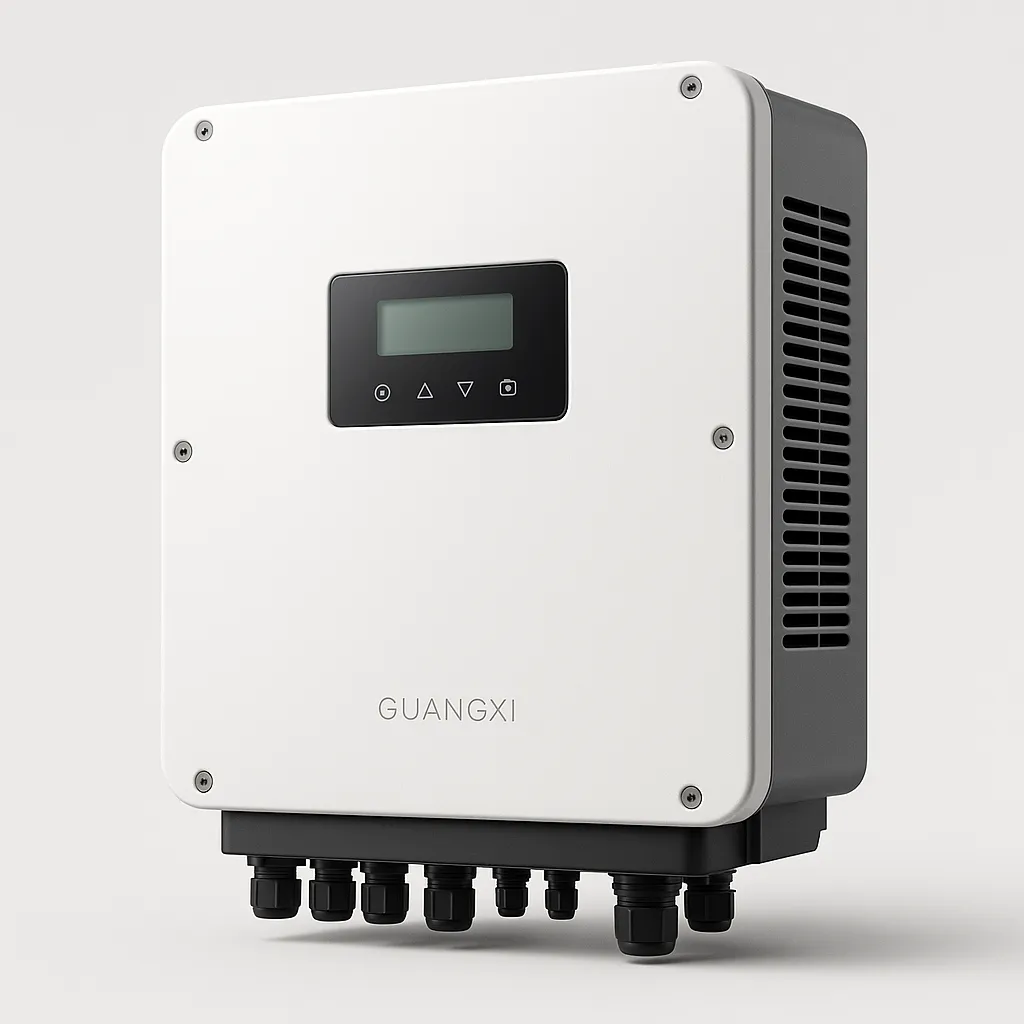
SolarInverterUS hybrid inverters are specifically designed for this scenario. Our units deliver 2x rated power for 10 seconds—enough to start heavy inductive loads. [TEST-005]
A Texas rancher with our 5kW hybrid unit successfully starts his 3HP deep well pump during outages. The math: 5kW rated, 10kW surge for 10 seconds, covers the 8,000W pump surge comfortably. [CASE-005]
Sizing for Critical Loads
Step 1: List your critical loads (what you want powered during outages):
|
Load
|
Running Watts
|
Surge Watts
|
Priority
|
|
Refrigerator
|
200
|
1,200
|
High
|
|
LED Lights (10)
|
100
|
100
|
High
|
|
Wi-Fi + Router
|
50
|
50
|
High
|
|
Furnace Blower
|
800
|
2,000
|
High
|
|
Central AC (optional)
|
3,500
|
10,000
|
Medium
|
|
Well Pump
|
2,000
|
8,000
|
Medium
|
|
Microwave
|
1,200
|
1,500
|
Low
|
Step 2: Calculate your inverter size:
-
Minimum: Sum of all "High" priority running watts
-
Recommended: Highest surge + other running loads
-
Ideal: Highest surge + all running loads (allows simultaneous use)
Example (Texas ranch with well pump):
-
High priority loads: ~1,200W running
-
Well pump surge: 8,000W
-
Minimum inverter: 3kW (with 6kW surge)
-
Recommended: 5kW (with 10kW surge)
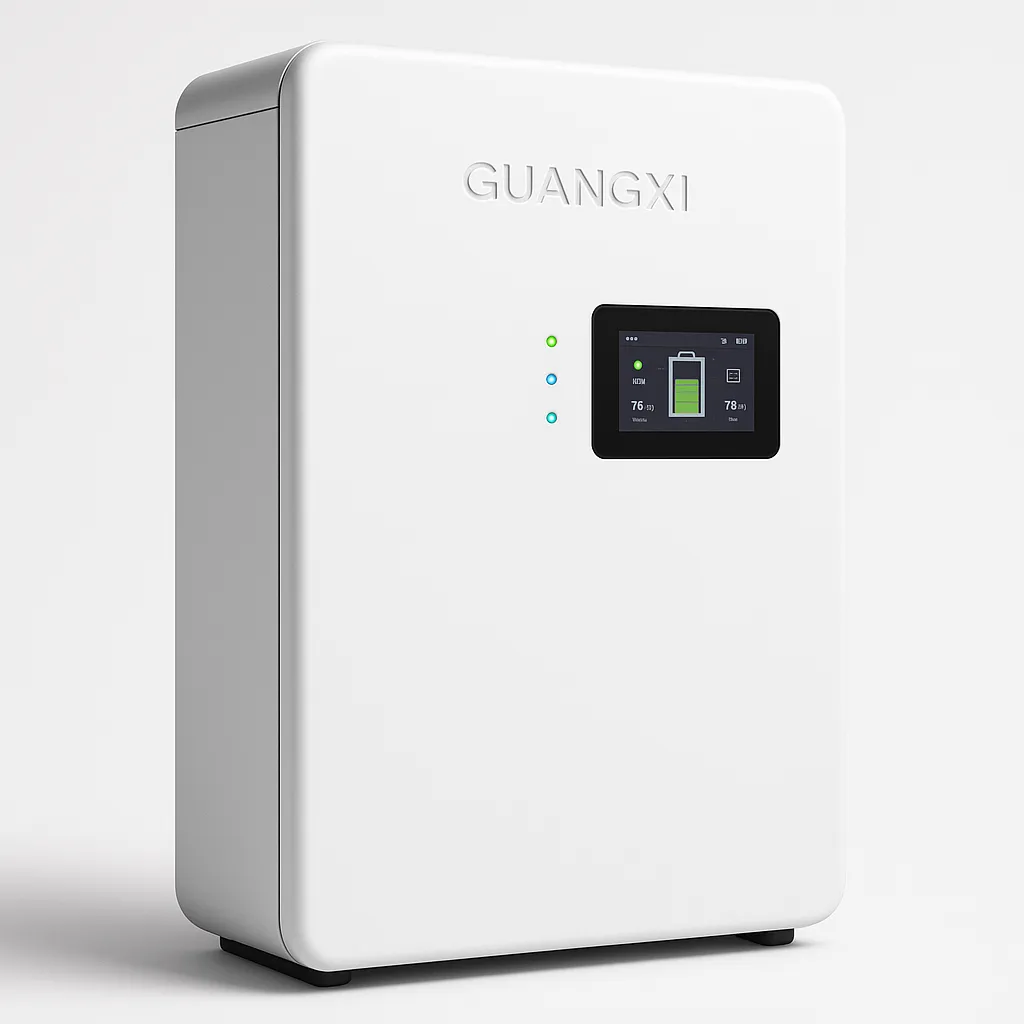
Battery Sizing for Backup
Once you've sized the inverter, size the battery:
Formula: Battery (kWh) = Critical Load Watts × Hours of Backup ÷ Depth of Discharge
For LiFePO4 batteries, use 80% depth of discharge (you can use 80% of rated capacity safely).
Example:
-
Critical loads: 1,500W average
-
Desired backup: 12 hours
-
Battery size: 1,500W × 12h ÷ 0.80 = 22.5 kWh
For most homes, 10-15 kWh provides overnight backup. Add more if you want to run AC during outages.
Part 3: The 120V/240V Question
This is crucial for American homeowners.
If you want to run during outages:
-
Central air conditioning
-
Electric dryer
-
Electric water heater
-
Well pump
-
Electric vehicle charger
You need 240V output.
Many smaller inverters only output 120V. To run 240V loads, you'd need:
SolarInverterUS hybrid units output native 120V/240V split-phase—two hot legs (L1, L2), neutral, and ground. Connect directly to your panel and power any 240V load without additional equipment.
As one customer noted: "The split-phase 120/240V output was exactly what I needed for my US home." [FEEDBACK-001]
Quick Reference: Sizing by Home Type
|
Home Type
|
Typical Load
|
Inverter Size
|
Battery
|
|
Small apartment (no backup)
|
500 kWh/month
|
3-4 kW
|
None
|
|
Standard suburban (no backup)
|
1,000 kWh/month
|
6-8 kW
|
None
|
|
Standard suburban (with backup)
|
1,000 kWh/month
|
8 kW hybrid
|
10 kWh
|
|
Large home (with backup)
|
1,500 kWh/month
|
10-12 kW hybrid
|
15-20 kWh
|
|
Rural property with well pump
|
1,200 kWh/month
|
8-10 kW hybrid
|
15 kWh
|
|
Tiny house / RV
|
200 kWh/month
|
3 kW hybrid
|
5 kWh
|
Final Sizing Checklist
Before purchasing, verify:
-
Calculated daily kWh usage from actual bills
-
Determined peak sun hours for your location
-
Applied NEC 120% rule to your panel size
-
Listed critical loads with surge requirements
-
Verified inverter surge rating exceeds largest motor start
-
Confirmed 240V output if needed for heavy appliances
-
Sized battery for desired backup duration
-
Verified battery compatibility (SolarInverterUS supports all major 48V LiFePO4 brands) [TEST-006]
Need help with your specific sizing? Send us your electric bills and appliance list. Our US-based team will calculate your exact requirements.