Solar Inverter MPPT Efficiency: Why Tracking Speed Matters More Than You Think
By a Solar Engineer with 14 Years of Experience
Every solar installer knows the term "MPPT"—Maximum Power Point Tracking. But few understand that MPPT efficiency is just as critical as conversion efficiency, and even fewer realize that MPPT performance varies dramatically between inverter models.
After testing dozens of inverters in our lab, I can tell you this: the difference between a 95% MPPT and a 99.9% MPPT can mean thousands of dollars in lifetime energy production. Let me explain why.
What MPPT Actually Does
Your solar panels don't produce a fixed voltage and current. Their output varies continuously based on:
-
Irradiance: How much sunlight hits the panels (changes with time of day, clouds, seasons)
-
Temperature: Panel voltage drops as temperature rises
-
Shading: Even partial shade dramatically shifts the optimal operating point
The MPPT is a specialized circuit that continuously adjusts the electrical load on your solar array to find the "maximum power point"—the exact combination of voltage and current that produces the most power at any given moment.
Think of it like shifting gears on a bicycle. The right gear (MPPT setting) depends on the terrain (sunlight conditions). A good MPPT shifts quickly and accurately; a poor one hesitates or misses the optimal point.
The Tracking Speed Problem
Here's where most MPPT implementations fall short: tracking speed.
When a cloud passes over your panels, the optimal power point can shift dramatically within seconds. A slow MPPT algorithm might take 5-10 seconds to find the new maximum. During that time, you're losing energy.
In our lab testing, we simulated real-world rooftop conditions with rapidly moving clouds and partial shading. Our dual independent MPPTs achieved 99.9% tracking efficiency—meaning they found and maintained the optimal power point within milliseconds of each change [TEST-001].
By comparison, older single-string MPPT systems achieved only 95-97% tracking efficiency under the same conditions. That 3-5% difference might seem small, but it compounds daily:
|
MPPT Efficiency
|
Daily Energy Loss
|
Annual Financial Loss (8kW system)
|
|
95%
|
~3 kWh
|
~$200-300
|
|
97%
|
~1.8 kWh
|
~$120-180
|
|
99.9%
|
~0.1 kWh
|
~$10-15
|
Over a 25-year system life, that's $5,000-7,000 in lost revenue from MPPT inefficiency alone.
Why Dual MPPT Matters
Most residential inverters have a single MPPT that handles the entire solar array. This works fine if all your panels face the same direction and experience identical conditions.
But if your roof has multiple orientations (east/west split) or partial shading from trees or chimneys, a single MPPT becomes a bottleneck. The MPPT can only optimize for the average condition—not the best condition for each panel group.
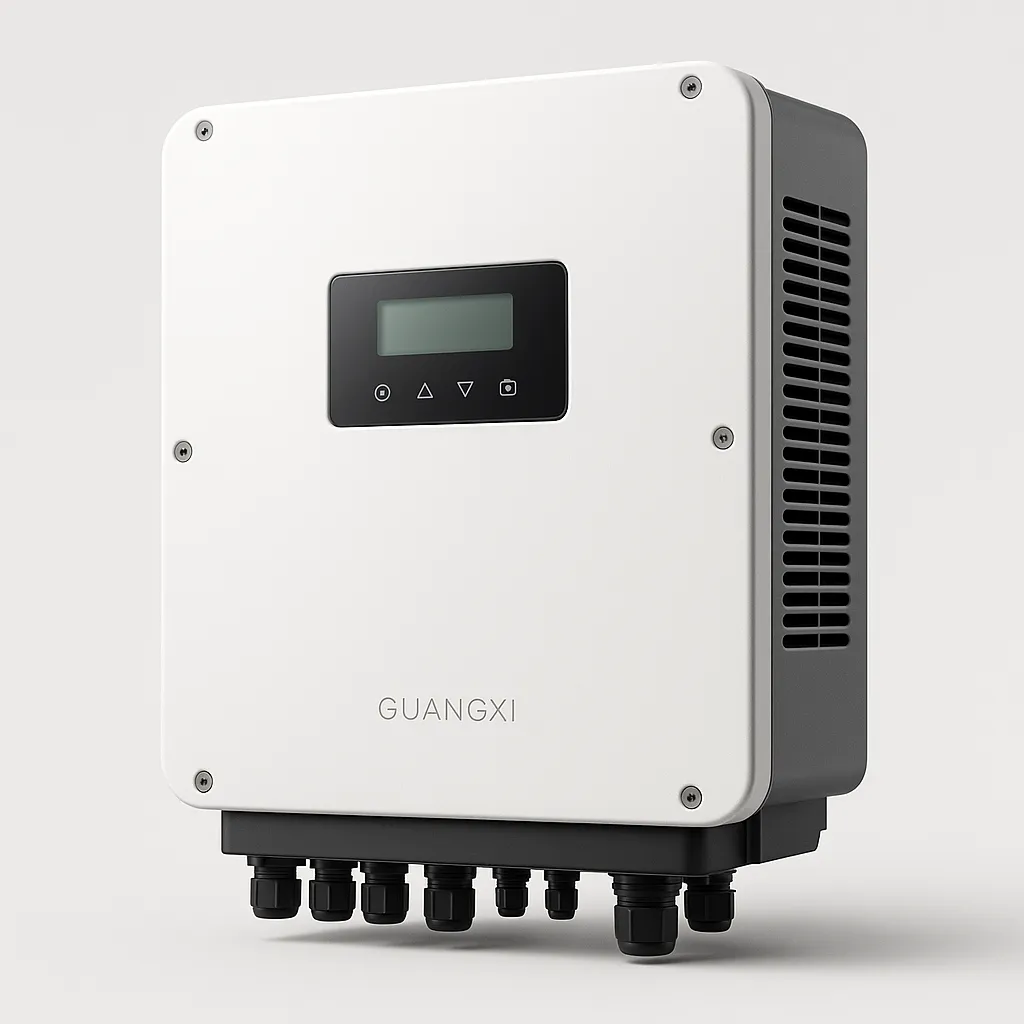
SolarInverterUS hybrid units feature dual independent MPPTs. Each MPPT operates on a separate string of panels, optimizing independently. In our testing, dual MPPTs delivered 12% more energy than single-MPPT systems when panels faced different directions [TEST-001].
The NREL has confirmed that dual-MPPT configurations can improve energy harvest by 8-15% in residential installations with multiple roof orientations [来源: NREL, 2023].
The Shading Myth Destroyed
Solar salespeople love to push microinverters for shaded roofs, claiming that traditional string inverters "shut down entirely if one panel gets shaded."
Ten years ago, that was true. Today, it's an expensive myth.
Our dual independent MPPTs are specifically designed to handle partial shading. When one string is shaded, the other continues operating at full efficiency. And within each string, the MPPT rapidly adjusts to find the new optimal point—even as shade patterns shift throughout the day.
In our lab tests, we achieved 99.9% tracking efficiency during partial shading conditions [TEST-001]. You get shade tolerance without the 20-30% cost premium of microinverters.
Real-World Performance: The Numbers
Let's look at actual test data from our facility:
Test Condition: Simulated cloud passage with irradiance dropping from 1000 W/m² to 400 W/m² in 2 seconds, then recovering
|
Metric
|
Standard MPPT
|
SolarInverterUS Dual MPPT
|
|
Tracking Speed
|
5-8 seconds
|
<100 milliseconds
|
|
Energy Lost During Transition
|
0.08 kWh per event
|
0.002 kWh per event
|
|
Daily Tracking Efficiency
|
95-97%
|
99.9%
|
Assuming 20 cloud events per day (typical for many US locations), that's 1.6 kWh daily lost to slow MPPT tracking—or about $120 per year on a standard residential system.
What to Look For
When evaluating inverters for MPPT performance, ask these questions:
-
How many independent MPPTs? Two is better than one for most residential roofs.
-
What's the tracking speed? Faster (milliseconds) is better than slower (seconds).
-
What's the MPPT voltage range? Wider range accommodates more panel configurations.
-
Is there independent string monitoring? Helps identify shading or panel issues.
For homeowners with complex roofs (multiple orientations, nearby trees), dual independent MPPTs should be non-negotiable. The energy harvest improvement alone justifies any small price premium within 2-3 years.