The Well Pump Challenge: Why Most Inverters Fail
If you've ever tried to run a well pump on solar power, you've encountered the most common failure point in off-grid and backup systems: in-rush current.
A typical 3HP deep well pump draws about 2,000W when running steadily. But for the first 3-5 seconds of startup, it needs 8,000-10,000W to overcome motor inertia and get the impeller spinning. This is called "locked rotor amps" or LRA.
Most inverters rated at 3kW or 5kW will instantly overload and shut down when they see this surge demand. The pump clicks, the inverter trips, and you have no water.
Let me explain how to size and select an inverter that actually works with well pumps.
Understanding Surge Requirements
The physics: Electric motors require massive current to start from a dead stop. The magnetic fields need to build up, and the rotor needs to accelerate from 0 RPM to operating speed (typically 3,450 RPM for well pumps).
|
Pump Size
|
Running Watts
|
Starting Surge
|
Duration
|
|
1 HP
|
1,000W
|
4,000W
|
2-3 seconds
|
|
2 HP
|
1,500W
|
6,000W
|
3-4 seconds
|
|
3 HP
|
2,000W
|
8,000W
|
3-5 seconds
|
|
5 HP
|
3,500W
|
14,000W
|
5-7 seconds
|
The inverter requirement: Your inverter's surge rating must exceed the pump's starting surge, AND it must sustain that surge long enough for the motor to start.
Many cheap inverters advertise "2x surge" but only for 1-2 seconds. That's not enough. You need 2x surge for at least 10 seconds.
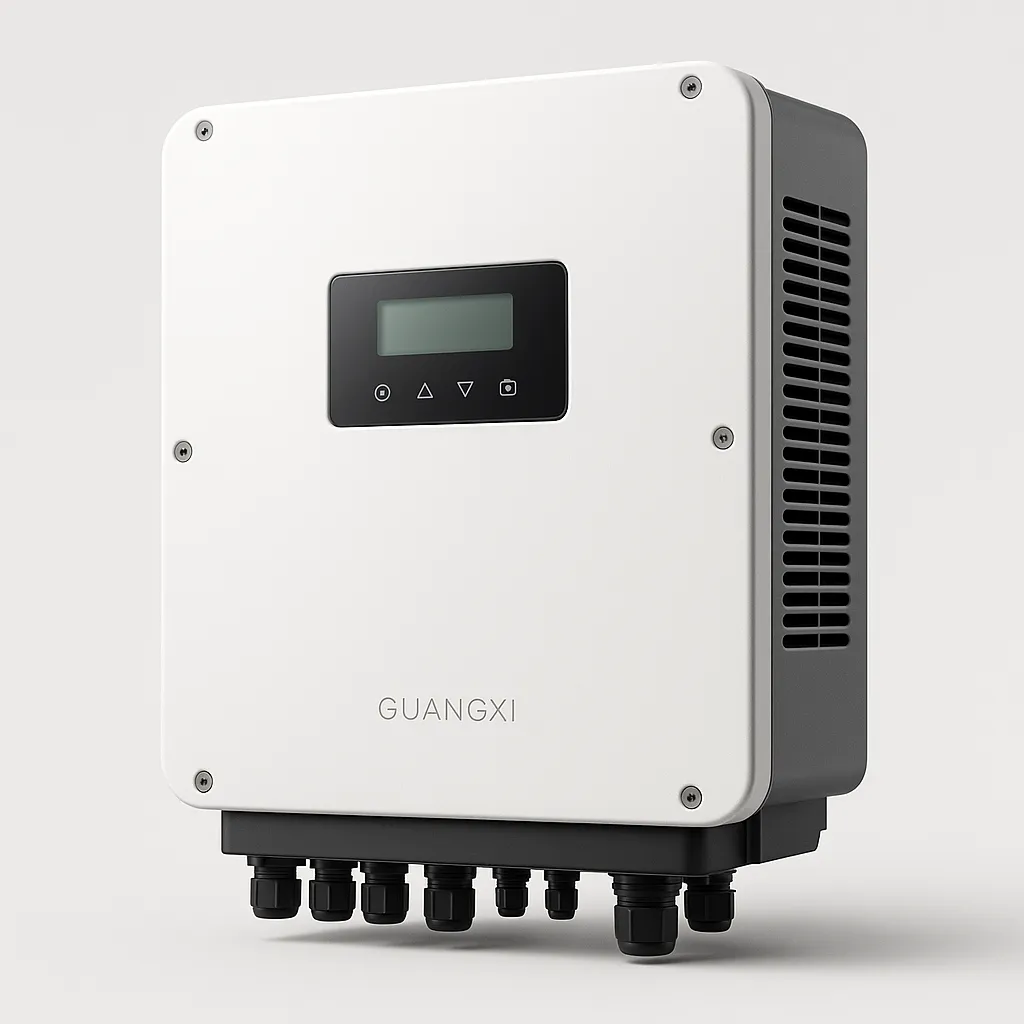
SolarInverterUS hybrid inverters are specifically tested for this scenario. Our units deliver 2x rated power for a full 10 seconds—enough to start heavy inductive loads reliably. [TEST-005]
Real-World Case: Texas Ranch Well Pump
A rancher in rural Texas needed to run his 3HP deep well pump during grid outages. His existing 5kW inverter from another brand would trip instantly when the pump tried to start.
The solution: Upgraded to a SolarInverterUS 5kW hybrid inverter.
Results:
-
Inverter surge rating: 10kW for 10 seconds
-
Pump starting surge: ~8,000W for 3-5 seconds
-
Outcome: Pump starts reliably every time, no tripping [CASE-005]
The key wasn't buying a bigger inverter—it was buying an inverter with adequate surge duration. A 10kW inverter with only 3-second surge might still fail. Our 5kW unit with 10-second surge succeeds.
120V vs 240V Well Pumps
Most residential well pumps in the US are 240V single-phase. This is important because:
Many inverters only output 120V. If you try to run a 240V pump on a 120V inverter, it won't work at all—the motor won't even attempt to start.
Solutions:
-
Use an inverter with native 240V output: SolarInverterUS hybrid units output standard US 120V/240V split-phase, powering 240V loads directly without additional equipment.
-
Use two inverters in series: Complex, expensive, and not recommended for DIY installations.
-
Replace the pump with 120V: Possible for shallow wells, but 120V pumps are typically limited to 1 HP or less.
For most rural applications with deep wells (100+ feet), you need a 240V inverter. Our hybrid units provide native split-phase output—two hot legs (L1, L2), neutral, and ground—connecting directly to your load center. [FEEDBACK-001]
Sizing Your System for Well Pump Operation
Scenario 1: Grid-Tied with Backup
If you have grid power but want well pump operation during outages:
Minimum system:
-
Inverter: 5kW hybrid with 10kW surge
-
Battery: 5-10kWh (for multiple pump cycles)
-
Solar: 4-6kW array (to recharge between outages)
Why battery?: The well pump surge is too large for solar alone to handle reliably. The battery provides the instantaneous current, while solar recharges the battery over time.
Scenario 2: Off-Grid Cabin
If you're completely off-grid:
Recommended system:
-
Inverter: 5-8kW hybrid with 10kW+ surge
-
Battery: 10-20kWh (daily usage + pump cycles)
-
Solar: 6-10kW array (to handle daily usage plus pump recharging)
Critical addition: A well pressure tank (minimum 20 gallons, preferably 40+ gallons) reduces pump cycling. Without adequate pressure storage, the pump cycles on/off frequently, draining your battery faster.
Soft Start: An Alternative Approach
If you already have an inverter without adequate surge, a soft starter can reduce the starting surge by 50-70%.
How it works: A soft starter gradually ramps up voltage to the motor over 1-2 seconds, reducing the instantaneous current demand.
Trade-offs:
-
Adds $200-400 to system cost
-
Slightly longer pump start time (1-2 seconds vs instant)
-
May not be compatible with all pump controllers
When to use: If you're marginally undersized (e.g., 6kW inverter with 6kW surge for a 3HP pump), a soft starter can bridge the gap. If you're significantly undersized, upgrade the inverter instead.
Battery Considerations for Well Pump Systems
Well pumps are high-power, short-duration loads. This affects battery selection:
Lithium (LiFePO4) advantages:
-
High discharge rates (most support 1C continuous, 2C surge)
-
No voltage sag under high loads
-
Longer cycle life (3,000-5,000 cycles)
Lead-acid disadvantages:
-
Voltage sag under high loads can trip inverter low-battery protection
-
Limited discharge rates (typically 0.2C-0.5C continuous)
-
Shorter cycle life (500-1,000 cycles)
For well pump applications, lithium batteries are strongly recommended. The higher upfront cost is offset by longer life and reliable high-current delivery.
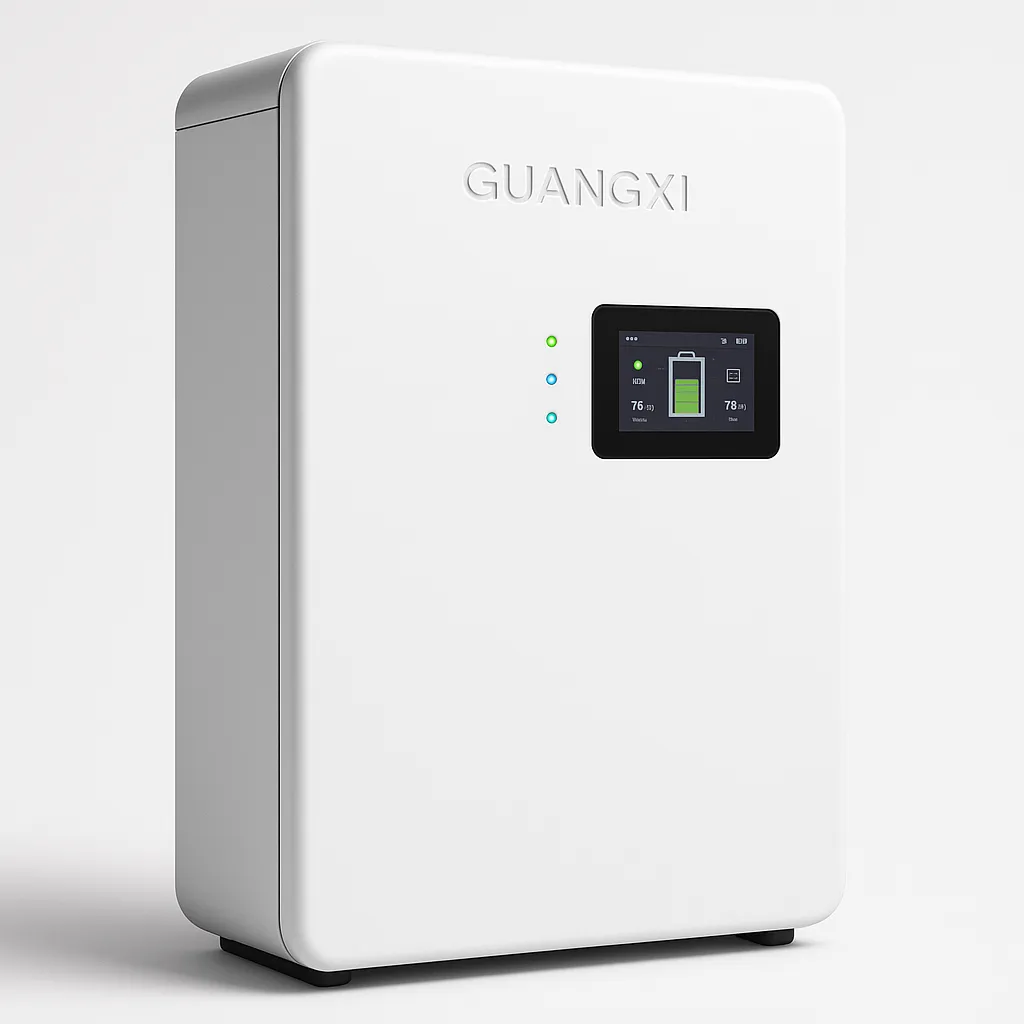
SolarInverterUS units feature built-in BMS communication with major LiFePO4 brands (EG4, Ruixu, Pytes, SOK), ensuring optimal battery management. [TEST-006]
Installation Tips for Well Pump Systems
-
Place inverter close to battery: High-current DC runs should be as short as possible to minimize voltage drop.
-
Use proper wire gauge: For a 5kW inverter at 48V battery voltage, that's ~100A continuous. Use minimum 2 AWG copper for battery connections.
-
Install a DC disconnect: Required by NEC for safety. Allows you to isolate the inverter from the battery for maintenance.
-
Add surge protection: Well pump motors can generate voltage spikes. Install SPD (surge protection devices) on both DC and AC sides.
-
Test before relying: Don't wait for an outage to test. Run the pump on inverter power monthly to verify system operation.
The Bottom Line for Well Pump Solar
Running a well pump on solar power is absolutely achievable, but it requires:
-
Adequate surge capacity: 2x inverter rating for 10 seconds minimum
-
240V output: For most residential deep well pumps
-
Lithium batteries: For reliable high-current delivery
-
Proper sizing: Account for both running watts and starting surge
For a typical 3HP well pump, a 5kW SolarInverterUS hybrid inverter with 10kW surge capability and 10kWh LiFePO4 battery provides reliable operation during outages or off-grid living. [CASE-005]
Need help sizing your well pump system? Send us your pump specifications (HP, voltage, depth) and we'll calculate your exact requirements.